Housing Guides
Planning building-material deliveries to remote communities
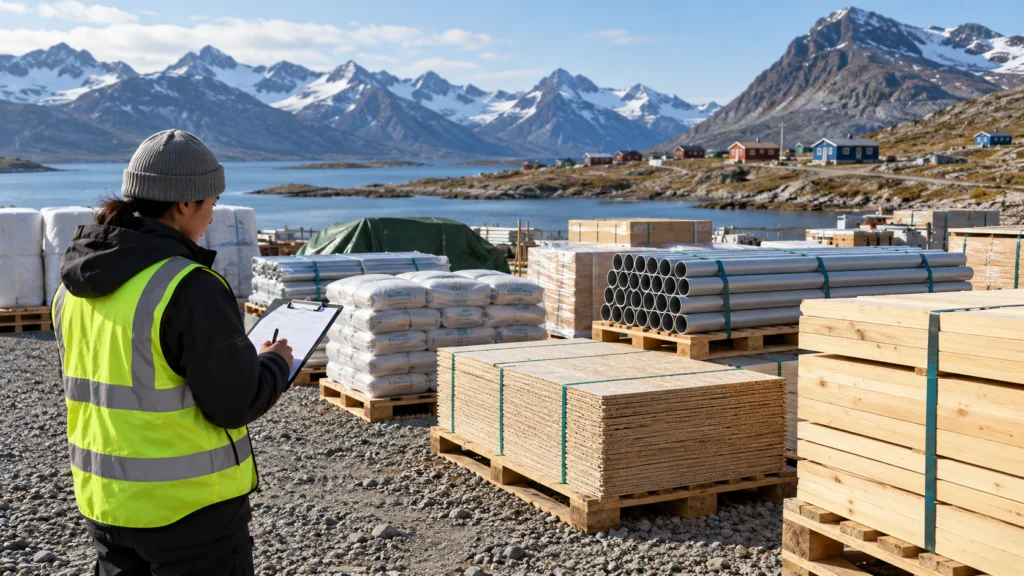
A building-material order for a remote community needs a logistics plan as well as a shopping list. Transport options, handling and delivery timing depend on the specific community and provider. Confirm them directly rather than applying a general southern delivery assumption.
Make the specification complete
List exact product codes, dimensions, quantities and compatible accessories. Ask the contractor to verify the complete assembly before ordering. A missing small component can delay a larger project when a convenient local substitute is unavailable or unsuitable.
Clarify who approves substitutions. A different adhesive, fixing or panel should not enter the project simply because it is easier to ship. Product compatibility and design requirements remain relevant throughout the transport chain.
| Stage | Confirm | Keep |
|---|---|---|
| Order | Exact items and approved quantities | A version-controlled list |
| Transport | Route, handling and current schedule | Written provider information |
| Arrival | Who inspects and records condition | Photos and discrepancy process |
| Storage | Product-specific environment and stacking | A prepared suitable location |
Plan the last part of the journey
Agree where the carrier’s responsibility ends and how goods move from there to the site. Include people, equipment and access. Do not assume “delivered to the community” means safely placed in the room where installation starts.
Check packaging and storage requirements for the actual weather and materials. Some products have temperature or moisture limits. A covered outdoor pile is not automatically suitable storage.
- Verify the list with the responsible installer.
- Confirm the current transport plan with the provider.
- Prepare inspection and suitable storage before arrival.
- Keep a documented process for damage, shortage and substitutions.
Leave room for a delay response
Ask what happens if one critical item is late or damaged. The answer may involve changing the construction sequence, not improvising with an incompatible product. Record who makes that decision and how costs are approved.
Retain product labels and transport records with the project file. They help distinguish ordering, handling and installation issues if a concern appears later. Avoid promising a universal delivery period or price; those need current project-specific confirmation.
Questions and answers
Can I use a general delivery estimate for every community?
No. Confirm the actual route, provider and timing for the destination and order.
Should small accessories be ordered later?
Include known compatible components in the verified list. Missing small items can affect a larger installation.
Is outdoor storage acceptable if goods are covered?
Only if it meets the specific product’s requirements. Temperature, moisture and stacking instructions still matter.