Housing Guides
Community spaces that support indoor movement during long winters
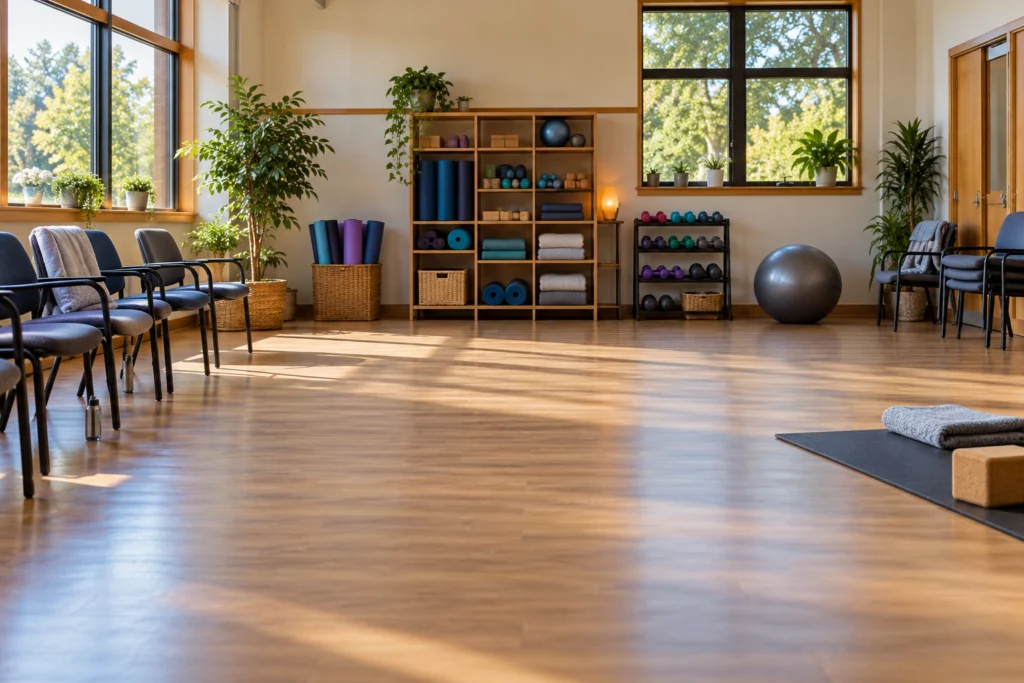
A community room can offer a place for movement when outdoor plans are less practical, but an empty room is not automatically an exercise facility. The intended use, people, equipment and operating arrangements need to be considered together.
Choose activities the room can support
Ask residents about the uses they would actually attend. A gentle movement group, a children’s supervised activity and a large equipment class need different layouts and staffing. Do not assume one programme serves every age or ability.
Obtain appropriate professional advice on floor capacity, ventilation, equipment and access. Individual exercise suitability belongs with qualified health or fitness professionals, not the room booking volunteer.
| Topic | Discuss | Practical outcome |
|---|---|---|
| Activities | What uses fit the room and community? | A realistic programme |
| Access | Who can attend and how? | Clear booking and assistance arrangements |
| Equipment | What is suitable and maintainable? | Safe storage and inspection responsibility |
| Operation | Who opens, cleans and responds to concerns? | A funded routine |
Plan the transition into the room
Wet footwear and bulky clothing need a place that does not obstruct the activity or exits. Keep the entrance separate from the movement area where practical. Check that storage remains usable when several people arrive at once.
Do not block vents or building services with mats or equipment. Ask the responsible building professional how the room is intended to operate for the proposed use and occupancy.
- Consult a range of residents before purchasing equipment.
- Keep routes and required building access clear.
- Name responsibility for cleaning and equipment checks.
- Offer a practical way to report a concern.
Review attendance and barriers
A low turnout may reflect timing, transport, language or unclear information rather than lack of interest. Ask what makes participation difficult and adjust the operating plan where possible.
Keep the programme maintainable. A few well-used activities with suitable support can be more valuable than a large equipment collection that cannot be serviced. Record repair and replacement needs before the initial enthusiasm fades.
Questions and answers
Can any shared room host an exercise class?
Not automatically. Suitability depends on design, equipment, occupancy and the activity. Obtain appropriate assessment.
Should a volunteer give individual rehabilitation advice?
No. Use qualified professionals for individual health and exercise questions.
Is buying equipment the first step?
Begin with resident needs, room suitability and an operating plan. Equipment should follow those decisions.