Housing Guides
Designing entryways around changing footwear and wet equipment
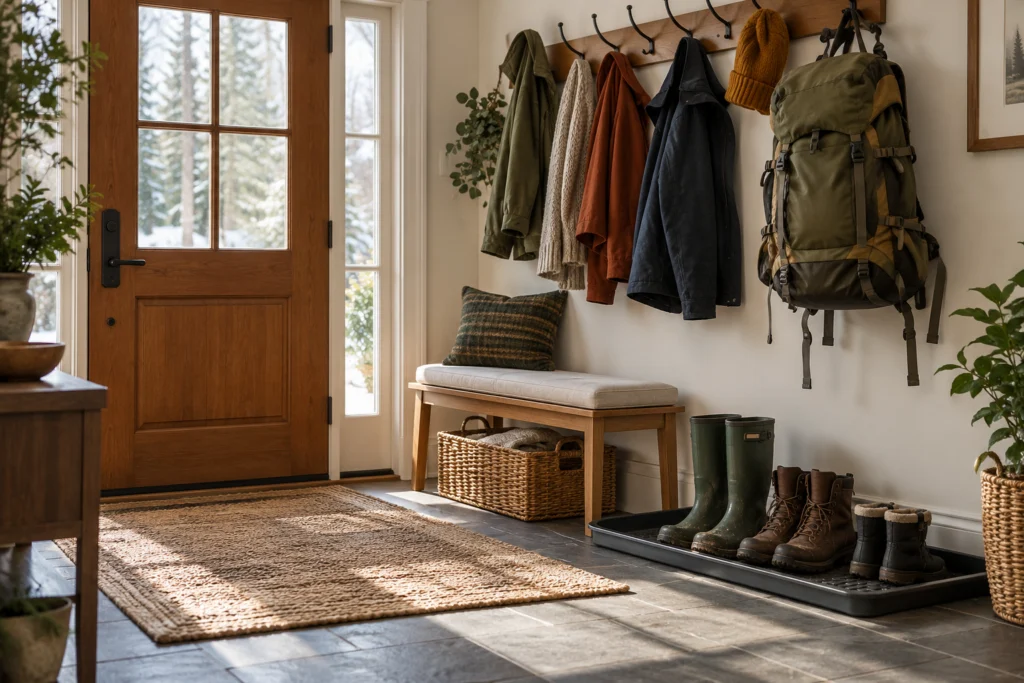
An entryway can contain enough storage and still work badly if the sequence is wrong. People need to arrive, close the door, remove footwear and put items away. Plan those actions in order rather than adding another hook wherever wall space remains.
Use the arrival sequence as the drawing
Mark the first landing place for bags, the place to sit if needed and the wet-footwear zone. Include the route used by another person passing through. A bench is useful only if feet, doors and bags still fit around it.
Test with the actual bulky equipment. A narrow shelf may look adequate until a full bag arrives. Keep heavy items at a practical handling height and use storage products suitable for their loads.
| Stage | Needed space | Common conflict |
|---|---|---|
| Arrive | Close the door and set down a bag | Storage occupies the door swing |
| Remove footwear | Stable position and reachable tray | No place for the person’s feet |
| Dry | Suitable visible arrangement | Damp items disappear into closed storage |
| Store | Accessible dry destination | Every item returns to the floor |
Choose materials for cleaning and compatibility
Check the floor and mat instructions together. A removable tray needs to be lifted and cleaned without spilling across the route. Keep mat corners flat and inspect beneath them rather than only cleaning the visible face.
Do not use heating or ventilation equipment as unapproved drying supports. Keep required clearances and ask the housing provider about suitable operation. Health Canada’s ventilation guidance supports treating moisture as a whole-home consideration.
- Draw the sequence with people and equipment in place.
- Keep exits and building-service access clear.
- Give damp and dry items different destinations.
- Choose storage that frequent users can reach without an awkward lift.
Test before permanent work
Use temporary markers or suitable existing furniture to identify conflicts. A short trial can reveal that a bench is too deep or a hook is in the wrong place. Confirm permission and a suitable fixing method before drilling in managed housing.
Review the arrangement after an ordinary busy day. The useful result is less repeated handling and a clear entrance, not a perfectly styled photograph that nobody can maintain.
Questions and answers
Should the whole wall be covered in hooks?
Only where hooks serve the sequence and remain clear of circulation. Occupied coats and bags need more space than empty hardware.
Can a tray stay uncleaned all winter?
No. Follow product care instructions and clean beneath it. Hidden moisture and grit still need attention.
Is a bench necessary?
Not in every layout, but suitable seating may help some users. Test the actual needs and available space.
Sources: canada.ca.