Housing Guides
Emergency household supplies: A practical storage checklist
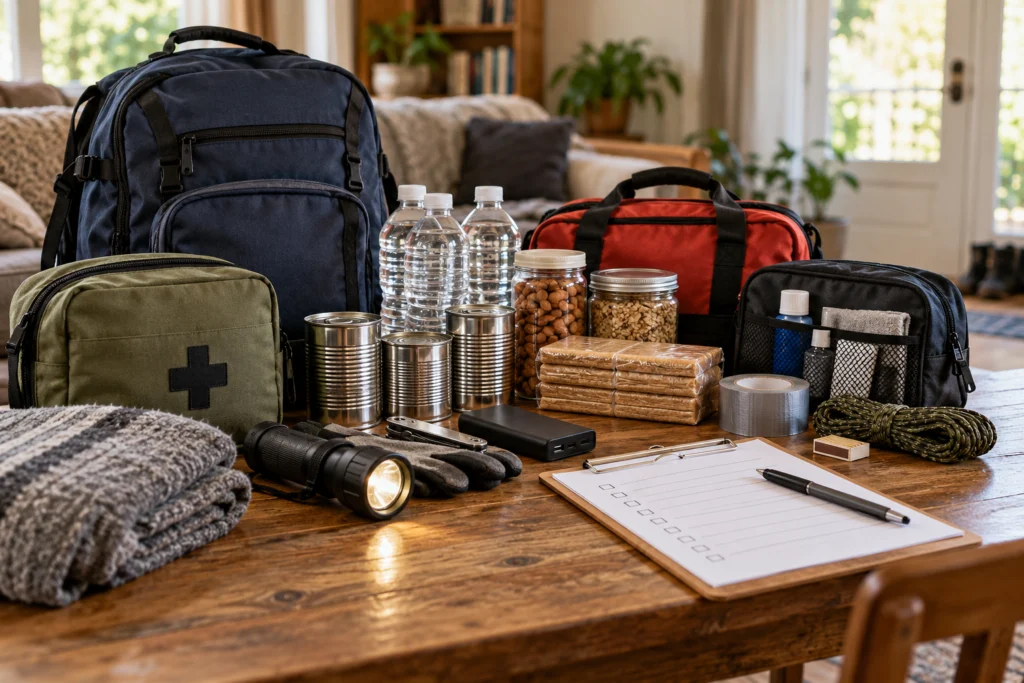
Emergency supplies help only if people can find and carry them when needed. A collection spread across hidden cupboards is harder to use than an organised kit with a known location. Begin with current official and local guidance, then adapt it to the household.
Use an official checklist as the starting point
Public Safety Canada recommends preparing for at least 72 hours and keeping the kit portable and accessible. It identifies basic supplies such as food, water and a suitable flashlight. Local risks and remote-community circumstances may call for additional planning beyond a general national starting point.
Consider individual needs, including prescribed medicines, accessibility, infants, pets or service animals. Ask appropriate professionals about storage and continuity for health-related supplies rather than improvising a medication plan.
| Group | Planning question | Storage check |
|---|---|---|
| Basic supplies | What does current official guidance recommend? | Suitable containers and expiry review |
| Communication and light | Can items be found and operated? | Accessible location and working condition |
| Personal needs | What is specific to this household? | Professional guidance where needed |
| Portable items | What can be carried if leaving? | Manageable weight and clear access |
Choose a practical location
Keep the kit where responsible household members know to look. Avoid a position blocked by seasonal equipment or requiring an unsafe lift. A large household may need supplies divided into manageable bags rather than one very heavy container.
Follow product storage instructions for food, water, batteries and health items. Do not assume an unheated space suits every supply. Keep hazardous products away from children and separate from food as instructed.
- Review current national and local emergency guidance.
- Make the location known to the household.
- Keep a dated list and replace items as required.
- Pair the kit with a household communication and emergency plan.
Practice finding the essentials
A short check can reveal that the flashlight is buried or that a bag is too heavy. Use that information to improve the arrangement. Do not wait for an actual disruption to discover the storage is inaccessible.
Review after household changes and after supplies are used. A kit is not a substitute for official instructions during an emergency; follow the relevant authorities and seek urgent help when required.
Questions and answers
Is one fixed kit suitable for every northern household?
No. Use official guidance and adapt to local risks, household size and personal needs.
Should the kit be one large box?
Not necessarily. Manageable portable bags can be more practical, especially for larger households.
Does a kit replace an emergency plan?
No. Communication, local instructions and practical arrangements are also needed.
Sources: canada.ca.