Housing Guides
Storage ideas for outdoor clothing in compact homes
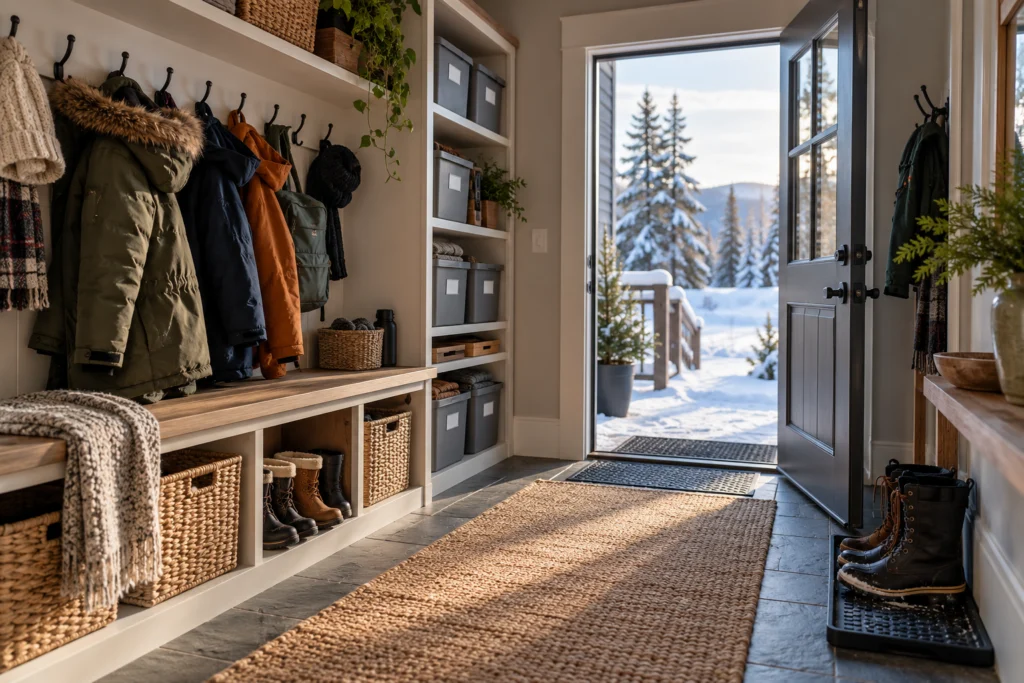
Bulky outdoor clothing needs more space than an empty wardrobe suggests. In a compact home, storage works best when everyday items, wet gear and seasonal reserves have different places. Begin by reducing the handling needed after an ordinary arrival.
Sort by use and condition
Keep frequently worn items accessible to the people who use them. Move dry seasonal reserves to suitable storage rather than filling the entrance with every coat owned. Do not discard essential equipment simply because it is not used every week.
Follow care instructions for drying and storage. A sealed bin may suit some dry items but should not become a place to conceal damp clothing. Keep heating and ventilation equipment clear as instructed.
| Zone | Contents | Practical check |
|---|---|---|
| Daily reach | Current coats, mitts and hats | Users can retrieve them without climbing |
| Drying stage | Damp items in suitable conditions | No blocked equipment or hidden moisture |
| Seasonal reserve | Clean dry items not currently needed | Labels and appropriate storage environment |
| Repair area | Items awaiting attention | A clear next action rather than an indefinite pile |
Use the available height carefully
Shelving or hooks need an appropriate fixing method and load capacity. A higher position is not useful if it creates an awkward daily lift. Keep heavier or frequently handled items at a practical level.
Avoid projecting hardware in narrow routes. Check the space with clothing hanging from the hooks, not only the empty installation. Large sleeves and bags can reduce the remaining passage.
- Give each frequent user an accessible storage position.
- Separate damp items from dry reserves.
- Label only the categories that help retrieval.
- Keep a clear route through the entrance with storage occupied.
Review the system when seasons change
Remove items for repair and confirm what is still suitable. Store clean dry reserves according to their requirements. Keep essential items identifiable so a seasonal change does not require searching every box.
If moisture persists around storage, record it and contact the housing provider or an appropriate professional. More containers do not solve a home ventilation or building issue.
Questions and answers
Should all clothing stay by the entrance?
No. Keep current daily items accessible and use suitable separate storage for dry seasonal reserves.
Can damp mitts go in a closed bin?
Follow their care instructions and provide an appropriate drying stage. Closed storage can hide moisture.
Is a high shelf always the best space saver?
Only if items can be handled safely and the shelf is suitable. Daily access and load matter as much as floor space.
Sources: canada.ca.