Housing Guides
What a useful home maintenance record should include
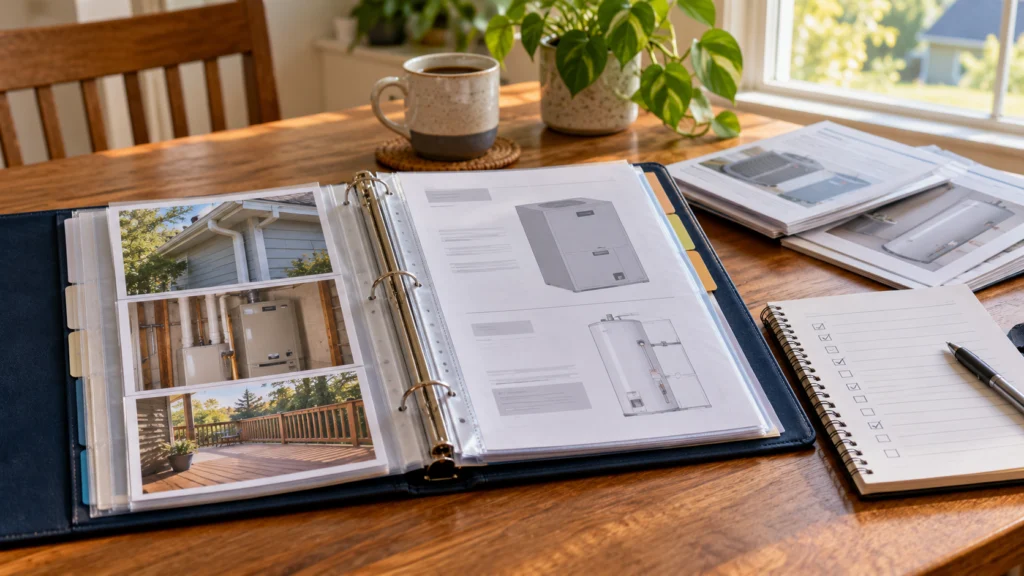
A maintenance record is useful when it answers three questions: what happened, what was done and what still needs attention. It does not need to be a complicated database. A clear folder or simple file can help residents, housing providers and tradespeople discuss the same history.
Record events while details are fresh
Use a short entry with the date, location and observation. Add photographs where helpful and safe. Keep your own description separate from a professional diagnosis or recommendation.
Attach relevant work orders, product references and instructions. If information is missing, mark it unknown rather than filling the gap from memory. A modest accurate record is better than a detailed invented timeline.
| Field | Include | Purpose |
|---|---|---|
| Location | Room, fixture or equipment identifier | Finds the right issue |
| Observation | What was seen, heard or noticed | Describes the concern |
| Action | Who attended and what was done | Tracks the response |
| Follow-up | Next task and responsible contact | Prevents an unresolved item disappearing |
Keep access practical and private
Choose a location the responsible household members can use. Keep emergency and service contact information available in an appropriate form, but avoid exposing account credentials or unnecessary private details in a shared maintenance file.
For rental or managed housing, use the required reporting channel as well as your own record. A personal note does not prove the responsible organisation received the report.
- Use consistent room and equipment names.
- Keep photographs with the matching dated entry.
- Record the reporting channel and response.
- Mark an item complete only when the agreed follow-up is understood.
Review a small list of open items
Separate urgent concerns from ordinary planned tasks and follow the appropriate emergency process when needed. Do not rely on a monthly review for an active hazard. For routine items, a short regular check helps identify what is waiting on someone else.
When equipment is replaced, update the product reference and archive obsolete instructions. The working file should point to the current system rather than several nearly identical manuals.
Questions and answers
Is a photograph enough for a maintenance report?
It can help, but date, location, context and a clear report through the proper channel are also useful.
Should I record my own diagnosis?
Keep observations distinct from explanations. Note a professional assessment as such and retain the source.
Does the file need special software?
No. Use a format you can maintain, back up and share appropriately. Reliability matters more than complexity.